The Hidden Cadence of Funding Flows in Multi-Game Mobile Platforms
Written by Olivia Powell · Aug 19, 2026

The Hidden Cadence of Funding Flows in Multi-Game Mobile Platforms
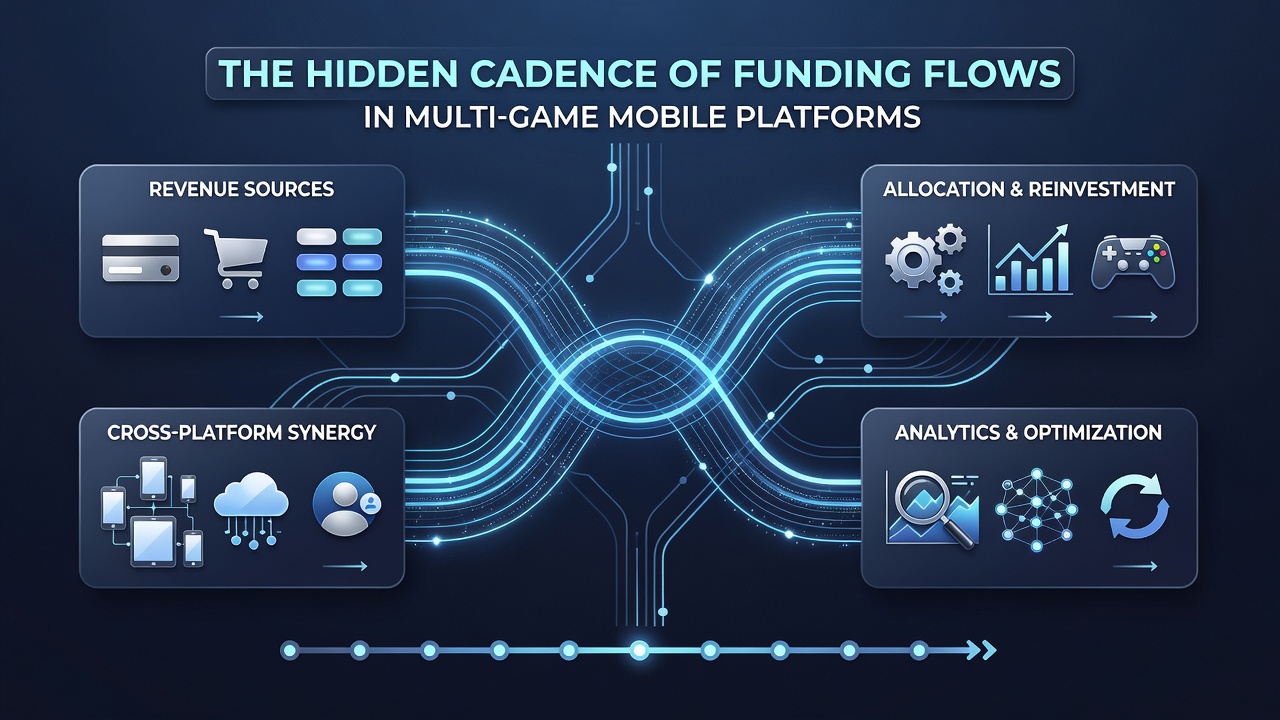
Funding flows in multi-game mobile platforms follow distinct patterns that researchers track through transaction data and user behavior logs. These systems handle deposits that users allocate across slots, table games, and live dealer interfaces, creating sequences where initial transfers influence subsequent choices in game selection and wager sizing. Data from regulatory filings shows that platforms often route funds through centralized wallets before distributing them to individual game modules, a process that generates measurable intervals between deposits and active play sessions.
Transaction Patterns Across Integrated Game Environments
Observers note that funding decisions in these platforms rarely occur in isolation because users maintain balances that carry over between different game types. A deposit made in the morning might support both short reel sessions and extended card play later in the day, with the platform recording each allocation through timestamped logs. Studies from industry research groups indicate that peak funding activity clusters around specific hours, particularly in regions where mobile penetration exceeds 70 percent of adult smartphone users. According to reports issued by the Australian Communications and Media Authority, transaction volumes in multi-game environments rose steadily through 2025, with patterns emerging around recurring deposit amounts that align with bonus eligibility thresholds.
Those who analyze platform architecture describe how sequential funding steps create a cadence: an initial transfer triggers verification, balance updates, and then immediate availability across all supported titles. This structure allows users to switch between progressive jackpot slots and video poker variants without additional deposits, yet each switch registers as a distinct internal movement within the system. Figures released by the Nevada Gaming Control Board in mid-2025 revealed similar interval patterns, where average time between funding events and first wager averaged under three minutes on integrated mobile applications.
Regulatory Developments Shaping August 2026
Policy changes scheduled for August 2026 are expected to require enhanced reporting on funding source verification across multi-game mobile platforms operating in certain jurisdictions. European regulatory bodies have already piloted similar requirements, and data from those trials shows that platforms must now segment transaction records by game category when submitting compliance documentation. Researchers at several European universities have examined how these rules affect the timing of cross-game transfers, finding that mandatory disclosures can lengthen the interval between a deposit and its distribution to secondary games by up to 45 seconds in tested environments.
Industry organizations such as the Canadian Gaming Association have published guidance documents that outline best practices for tracking funding flows while maintaining user privacy standards. These documents emphasize the use of aggregated datasets rather than individual account histories when studying overall cadence patterns. Platforms that adopted such methods early reported smoother transitions when new reporting rules took effect in other markets.
Allocation Mechanics and Cross-Game Dynamics
Allocation mechanics determine how a single deposit splits across multiple game engines within one session. Platform logs typically record the proportion directed toward high-volatility slots versus lower-volatility table options, creating datasets that analysts use to identify recurring user strategies. Evidence from academic papers on digital gaming infrastructure indicates that funding flows exhibit rhythmic qualities, with clusters of small transfers followed by larger consolidations when users decide to consolidate remaining balances.
One documented case involved a platform that introduced simultaneous access to reel and card-based titles, after which average session funding increased by 12 percent according to internal metrics shared with trade publications. The increase correlated with reduced friction in moving funds between game types, allowing users to respond more quickly to changing game conditions without exiting the application. Government agencies in several Australian states have begun requesting similar segmented data as part of routine oversight procedures scheduled to expand in 2026.
Conclusion
Funding flows in multi-game mobile platforms operate through interconnected systems that record every transfer, allocation, and balance update with precise timestamps. Regulatory updates planned for August 2026 will likely standardize reporting requirements across additional jurisdictions, building on existing frameworks already tested in Europe and parts of North America. Data collected by oversight bodies and academic researchers continues to map the rhythmic patterns that emerge when users navigate between different game formats within a single funded session. These records provide the factual basis for understanding how deposits move through integrated mobile environments over time.